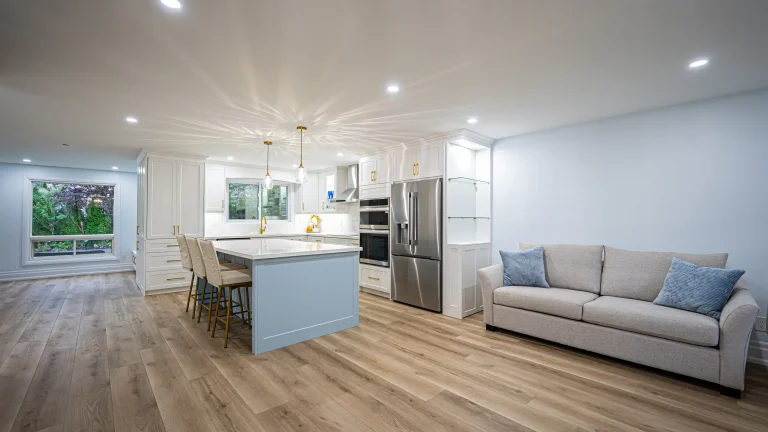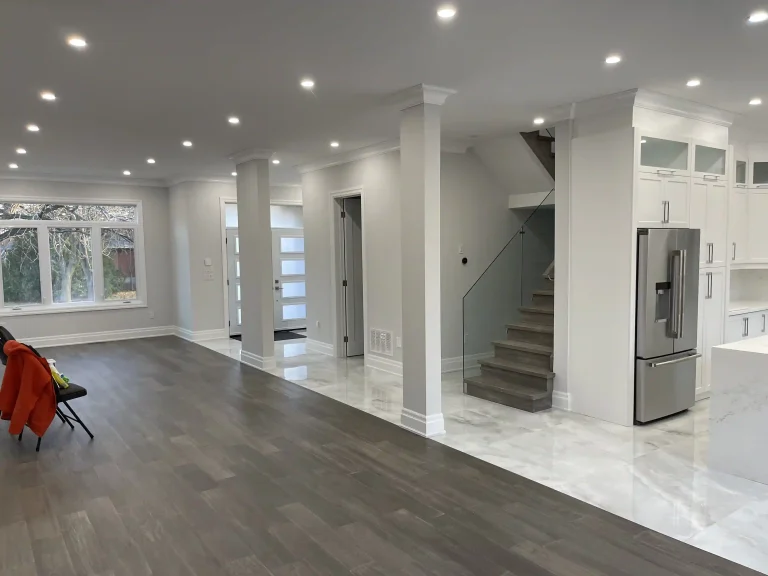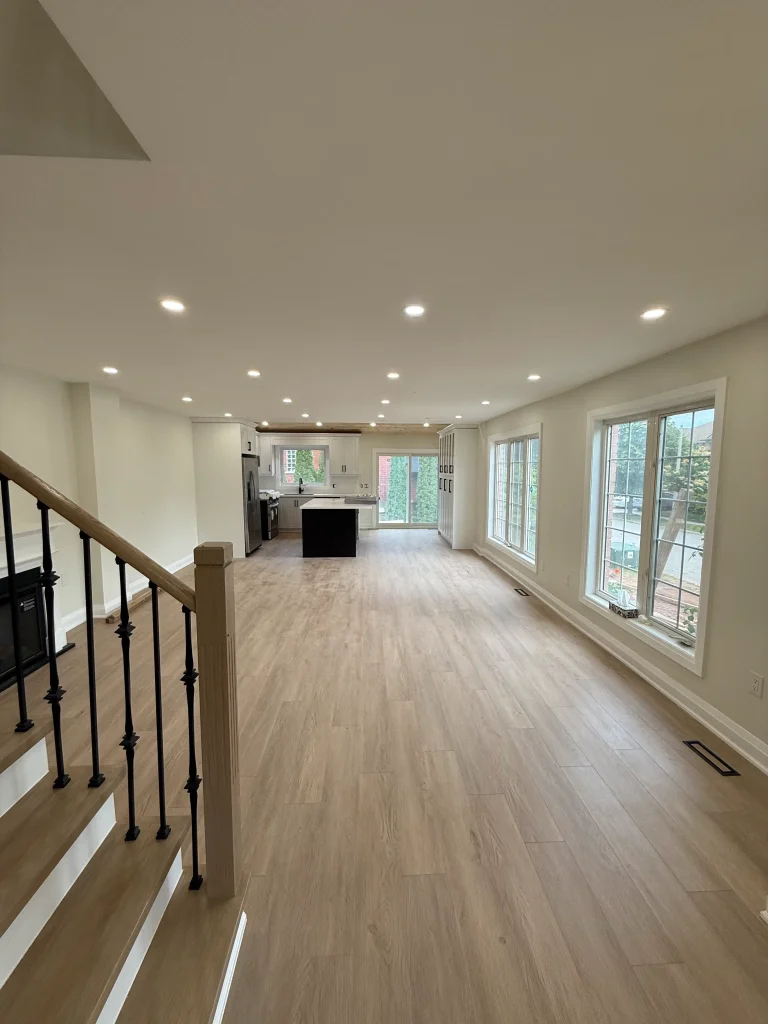
To compare renovation quotes in Burlington fairly, have every contractor price the same written scope. Then check the items that are most often left out or priced differently: permits and drawings, allowances, disposal, site protection, HST, the 10% statutory holdback, warranty and change-order terms. Most of the time, a lower total just means fewer of those items are included.
- Send every bidder the same one-page scope and ask for line items, not a lump sum.
- Allowances cause the biggest gaps. Get them in dollars, and find out if they cover supply only or supply and install.
- Confirm whether each price includes 13% HST, and who pays the City of Burlington and ESA permit fees.
- Ontario law has owners hold back 10% of the value of the work. Check that the payment schedule allows for it.
- Have the estimate written into the contract. That caps overruns unless you sign a change.
Start with one scope, not three conversations
Three contractors walk through your house and each one hears a slightly different project. One assumes you're keeping the tub. Another assumes new pot lights. The third prices the cheapest vanity on the market. The totals end up miles apart, and none of them is wrong. They just aren't quoting the same job.
Ontario's consumer guidance says to get written estimates from at least three contractors. Three quotes only help if they price the same work. Here's how we'd set it up:
- Write a one-page scope. List the rooms, what gets removed, what moves (walls, plumbing, electrical, ductwork) and the finish level you want.
- Send that same sheet, plus any drawings, to every bidder.
- Ask for a line-item price by trade or stage, not one number.
- Ask for a written list of exclusions and assumptions.
- Put the answers side by side in a spreadsheet, using the checklist below.
A sanity check also helps. These are our published ranges, before HST. For more detail, see our Burlington kitchen renovation cost guide and the bathroom renovation cost guide for Burlington.
| Project | Gracia published range (before HST) |
|---|---|
| Powder room | $7,000 to $20,000 |
| Main bathroom | $28,000 to $40,000 |
| Ensuite | $35,000 to $55,000 |
| Kitchen | $40,000 to $140,000+ |
| Basement | $25,000 to $100,000+ |
| Whole-home renovation | $100,000 to $250,000+ |
| Home addition | $120,000 to $350,000+ |
The printable checklist: what's often missing
Print this out and go down each quote line by line. Any blank you can't fill in is a question for the contractor.
| Item | What's often missing | Question to ask |
|---|---|---|
| Design and drawings | Permit drawings, engineering for beams | Who prepares the drawings, and is that in the price? |
| Building permit and zoning | City fees and zoning clearance | Who applies, who pays, and who attends the inspections? |
| ESA notification | Electrical permit and inspection | Is the ESA fee on this quote, and who is the licensed electrical contractor? |
| Demolition and disposal | Bins, haul-away, recycling | How many bins are included, and where will they sit? |
| Site protection | Floor runners, dust walls, HVAC covers | How will you protect the rooms you aren't renovating? |
| Hazardous materials | Asbestos testing in older homes | What happens if testing comes back positive? |
| Allowances | Realistic dollar amounts | Is each allowance supply only or installed? |
| Hidden conditions | Rot, old wiring, damaged subfloor | What are you assuming about what's behind the walls? |
| Finishing trades | Drywall, paint, trim in adjacent rooms | Where does the painting stop? |
| HST | Tax left off the headline number | Is this price before or after HST? |
| Deposit and payments | Large up-front payments | What milestones trigger each payment? |
| Holdback | No line for the statutory 10% | How does your schedule handle the holdback? |
| Change orders | How changes are priced | Are changes priced and signed before the work is done? |
| Schedule | Start date only, no duration | How many working weeks, and what could delay it? |
| Warranty | Length and what it covers | Can I see the warranty in writing before I sign? |
| Insurance and WSIB | Proof of coverage | Can you send your liability certificate and WSIB status? |
Permits, drawings and City fees in Burlington
Permit costs are small next to the overall budget, but they cause a lot of confusion. Some quotes include them, some list them as extra, and some don't mention them at all.
Building permit and zoning clearance
Under the City's 2025 fee schedule, Burlington charged a minimum building permit fee of $377. Larger jobs are calculated from floor area. Council also considered a proposed 5.35% increase to 2026 building permit fees, so check the current Schedule A before you budget. The City says the fee includes plan review and site inspection services.
Zoning clearance is a separate charge, and quotes often skip it. Burlington's 2025 zoning fees listed $390 for a basement finish, $1,380 for a residential addition and $1,110 for an accessory dwelling unit. If you're planning a legal basement apartment in Burlington, ask each bidder to show both fees.
Drawings
The City notes that if anyone other than the owner prepares the plans, they must have the required technical qualifications under the Ontario Building Code. Ask who will stamp the drawings. Also ask whether an engineer is included if a wall is coming out.
Electrical
ESA is clear that general contractors are not licensed to do electrical work unless they hire a licensed electrical contractor (LEC). ESA also says the electrical permit should be listed on the estimate, and that a building permit and an electrical permit are separate things. If a quote never mentions ESA, ask about it.
Allowances: where low quotes hide
An allowance is a placeholder budget for something you haven't picked yet, like tile, plumbing fixtures, lighting or cabinet hardware. If an allowance is set too low, the quote looks cheaper on day one and you pay the difference later.
Four checks for every allowance:
- The dollar amount. "Tile allowance" with no number is not an allowance.
- Supply only or installed. A per-square-foot allowance that covers material only leaves labour, setting materials and trim pieces to be billed separately.
- What happens if you go over. Is the overage charged at cost, or with a markup?
- Does it fit the finish you described? If you asked for large-format porcelain and the allowance only covers basic ceramic, the quote is pricing a different bathroom.
Our view: fixed selections beat allowances. Choose the vanity, faucet and tile before you sign, and every bidder prices the same products. Comparing the quotes then becomes simple.
HST, deposits and the 10% holdback
Ontario charges 13% HST, and quotes don't always show it the same way. Ontario's guidance is to keep down-payments to no more than 10% and never pay the full amount before the work is done.
The holdback is separate from the deposit. Ontario's Construction Act generally requires owners to retain 10% of the value of the work as it is done, and a homeowner who hires a contractor is an owner. The same rule runs down the chain. A general contractor must also hold back 10 percent from each subcontractor. Homeowners should generally keep the holdback until lien rights expire, often about 60 days after completion. Amendments that took effect on January 1, 2026 made annual release of holdback mandatory for contracts lasting longer than one year. That mostly affects large additions and whole-home jobs, not a three-week bathroom.
Here's how that works on a main bathroom priced in the middle of our range:
| Line | Amount |
|---|---|
| Contract price before HST | $35,000 |
| HST at 13% | $4,550 |
| Total with HST | $39,550 |
| Deposit at 10% of total | $3,955 |
| Holdback (10% of the $35,000 of work) | $3,500, kept until the lien period passes |
A contract that sets out the holdback openly is a good sign. If a payment schedule asks for 100% at substantial completion, ask how the holdback fits in. Speak with a lawyer if anything about the release is unclear.
Change orders and the 10% estimate rule
Under the Consumer Protection Act, if the estimate is part of the contract, the final price can't be more than 10% over it unless you agree to new work or a new price. That only protects you if the estimate is actually written into the signed contract. The province puts it bluntly: if something isn't in your contract, you may not get it.
If you sign a contract worth $50 or more in your own home, you have a 10 calendar-day cooling-off period to cancel for any reason, without cancellation fees.
Ask every bidder:
- Are changes priced in writing and signed before the work happens?
- Are changes a fixed price, or cost plus a markup? What's the markup?
- How are hidden conditions handled once the walls are open?
- Does a change also move the schedule, and is that written down?
Warranty: read what it actually covers
"Fully warrantied" means nothing until you see it in writing. A workmanship warranty covers the installation: grout, tile lippage, doors that drift out of adjustment, a drain that weeps. Manufacturer warranties cover the products themselves. Ask how long the workmanship warranty lasts, what's excluded, who you call and how fast they come out. We give a 4-year workmanship warranty and put it in the contract, so you can compare it directly against the others.
Also ask about the deficiency walkthrough at the end. A good contractor walks the job with you, writes down every item and dates the fix.
What we see on site
These are the gaps that come up most when homeowners show us other quotes:
- Shower waterproofing isn't named. "Tile shower" tells you nothing. Ask which membrane system is being used, such as Schluter-Kerdi or Laticrete Hydro Ban, and whether it covers the full wet area.
- The subfloor is assumed to be fine. In older Burlington bathrooms, joists are often notched from decades of plumbing changes. Ask what's priced if the subfloor or joists need repair.
- The panel is assumed to have room. A kitchen with an induction range, a microwave drawer and a lot of pot lights can outgrow a 100-amp panel. Ask whether anyone checked the panel.
- Kitchen extras go missing. Countertop templating, backsplash, appliance hookup and venting the range hood outside are left off more often than you'd think.
- Basement code items are missing. Egress windows, insulation specs and ceiling height matter, especially for a second unit. Our Burlington basement renovation cost guide covers what drives the price.
- Protection is minimal. If the quote doesn't mention floor runners from the door to the work area, plastic dust walls and covered HVAC returns, expect dust through the whole house.
- Painting stops at the doorway. If a wall is opened from the hallway side, ask who patches and paints the hallway.
A fair way to line them up
- Put the line items from each quote in rows, one column per contractor.
- Fill any blank with the contractor's written answer, or your own estimate marked "to confirm".
- Change every allowance to the same real product price.
- Add HST to any quote that left it out.
- Compare the totals, then compare the warranty, schedule and change-order terms.
Usually the gap shrinks a lot once everything is filled in. What's left is a real difference in scope, quality or overhead, and you can judge that.
If you have quotes in hand and want to see how a fully scoped price compares, our page on home renovations in Burlington explains how we build one priced scope with design, permits and every trade included. For larger projects, our whole-home renovations page shows how we stage the work and the budget.