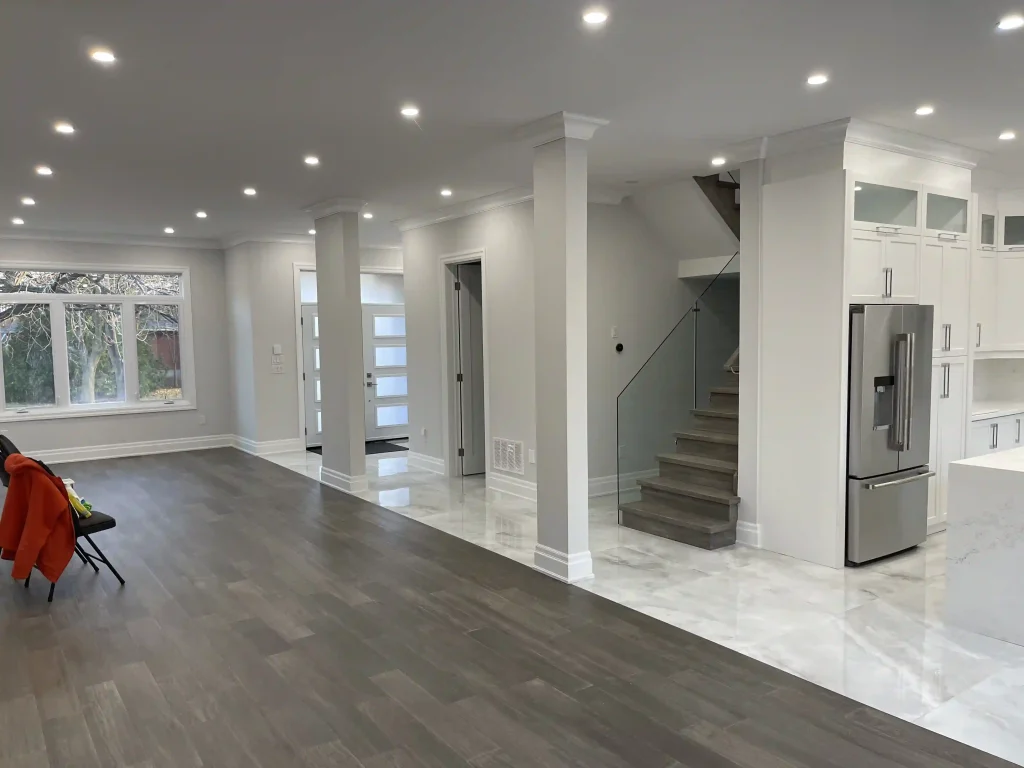
For most Oakville homeowners who like their street, renovating or adding on costs less than moving. Selling an average-priced Oakville home and buying a $1.7 million one costs roughly $88,000 to $122,000 in land transfer tax, commission, legal fees, movers and mortgage penalties. That money buys you no extra space. Moving is the better answer when your lot can't take an addition, when the location itself is the problem, or when the renovation would cost more than the price gap between the two homes plus those fees.
- A typical trade-up move inside Oakville costs about $88,000 to $122,000 that you never get back.
- Our published ranges: home additions $120,000 to $350,000+, whole-home renovations $100,000 to $250,000+, both before HST.
- Don't compare a renovation against zero. Compare it against the price gap between the two homes plus the cost of moving.
- Move if the lot, zoning, location or the bones of the house can't give you what you need.
- Interest rates are going up again, so the size of a bigger mortgage matters more than it did a year ago.
What it costs to move within Oakville
Start with what homes actually sell for. Oakville's average sale price was $1,365,169 in September 2026, with a median of $1,211,500, based on TRREB data. For a worked example, say you sell at that average and buy a bigger home at $1,700,000. These are the costs of making the switch:
| Cost | How it's calculated | Example |
|---|---|---|
| Ontario land transfer tax on the $1.7M purchase | Marginal provincial rates, 2% on the portion between $400,000 and $2M | $30,475 |
| Real estate commission on the $1.365M sale | 3.5% to 5%, plus 13% HST | $54,000 to $77,100 |
| Legal fees, sale and purchase | About $1,000 to $2,500 per transaction | $2,000 to $5,000 |
| Movers, 3-bedroom house | Local GTA move | $1,500 to $2,800 |
| Mortgage prepayment penalty | Example: 3 months' interest on $600,000 at 4.5% | $0 to $6,750+ |
| Total | About $88,000 to $122,000 |
What's behind those numbers:
- Land transfer tax. Ontario charges land transfer tax on marginal brackets: 0.5% on the first $55,000, then 1%, 1.5%, and 2% up to $2 million. Oakville buyers pay only the provincial tax. The Toronto municipal tax is charged on top of the provincial one only inside the City of Toronto.
- Commission. Commission is negotiable. Ontario commissions usually run 3.5% to 5% of the sale price, and 13% HST is added on top of the commission.
- Legal fees. Plan on roughly $1,000 to $2,500 for the real estate lawyer on each side of the deal.
- Movers. A local GTA move of a 3-bedroom house runs about $1,500 to $2,800. Packing, storage and overlapping closing dates cost extra.
- Mortgage penalty. If you break a closed fixed-rate mortgage, the penalty is generally the higher of three months' interest or the lender's interest rate differential, and the differential can be much larger. Ask your lender whether you can port the mortgage to the new home.
That list leaves out the costs that are hard to pin down: staging, pre-sale repairs, new window coverings, and the paint and fixes every "move-in ready" house turns out to need.
The bigger mortgage is the cost people forget
In our example you borrow about $335,000 more. At 4.5% (an example rate, not a quote), that's roughly $15,000 in interest in the first year alone, and you keep paying it for years. Rates are moving the wrong way for borrowers right now. On October 28, 2026, the Bank of Canada raised its target for the overnight rate by 25 basis points to 2.5%, and it said further increases may be needed.
To be fair, paying for a renovation with a HELOC or a refinance costs interest too. The difference is the amount. A $200,000 addition financed over the same period costs a lot less in interest than $335,000 of new mortgage, and none of it goes to land transfer tax or commission.
What the same money buys if you stay
These are our published ranges. All are before HST, so add 13%.
| Project | Gracia range (before HST) | What it usually fixes |
|---|---|---|
| Home addition | $120,000 to $350,000+ | Not enough bedrooms, a cramped main floor, no main-floor family room |
| Whole-home renovation | $100,000 to $250,000+ | Chopped-up layout, dated everything, old systems |
| Kitchen | $40,000 to $140,000+ | Kitchen too small or closed off, poor storage |
| Basement | $25,000 to $100,000+ | Need a rec room, guest suite, office or rental unit |
| Ensuite | $35,000 to $55,000 | No proper primary bathroom |
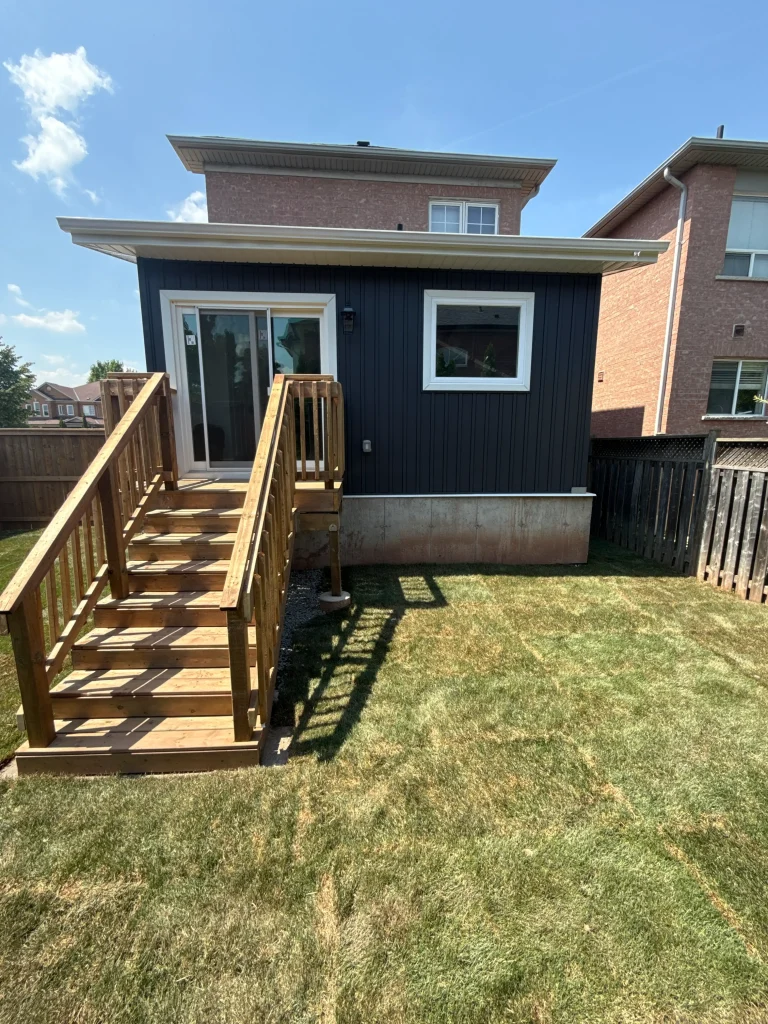
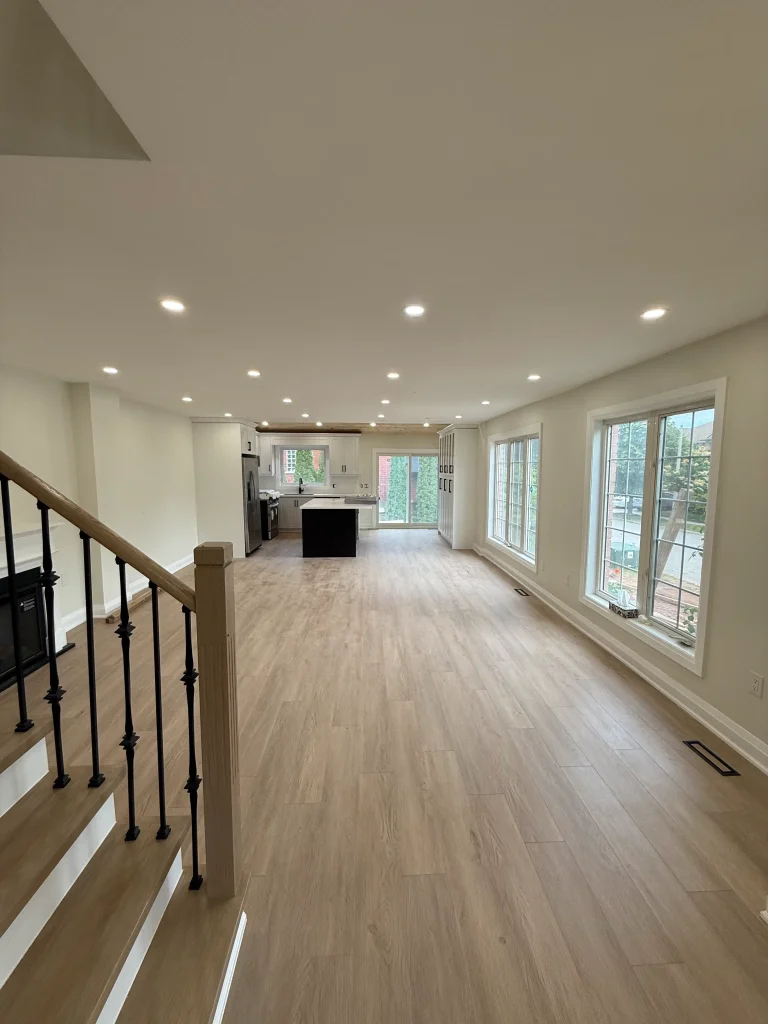
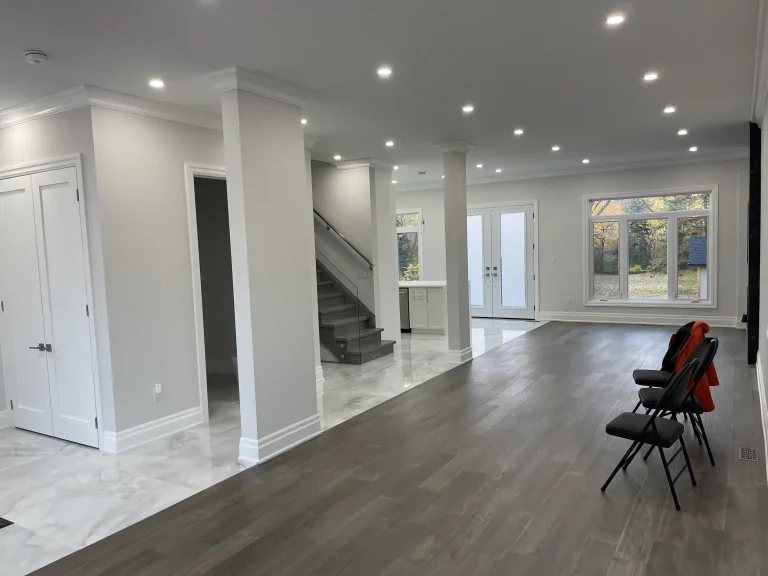
A lot of families who think they need to move really need about 400 to 800 more square feet in the right place. A rear home addition in Oakville with a family room and an opened-up kitchen often solves that. Sometimes the space is already there. A finished lower level through our basement renovation in Oakville work can add a guest suite and a play room for less than the commission on a sale. If the long-term plan includes aging parents or rental income, legal basement apartments in Oakville are worth pricing before you list.
Renovate vs add on vs move, side by side
| Factor | Renovate | Add on | Move |
|---|---|---|---|
| Money you don't get back | Low | Low | About $88,000 to $122,000 in our example |
| New square footage | None, better use of what you have | Yes, built to your plan | Yes, but on someone else's layout |
| Location and schools | Unchanged | Unchanged | Can change |
| Disruption | Moderate | High while the shell is open | High, but short |
| Main risk | Hidden conditions in walls | Zoning limits, permit timing | Overpaying, buying someone else's problems |
| Where the money goes | Into your house | Into your house | Mostly into fees and a bigger loan |
A simple way to decide
- Name the problem in plain terms. For example: "We need a fourth bedroom and a main-floor family room," or "We need to be closer to my work." Square footage problems and location problems call for different answers.
- Price the move. Find the price of a house that actually fixes the problem. Subtract what yours would sell for, then add the transaction costs from the table above.
- Price the fix. Get a design-build range for the work. Add 13% HST and keep a 10% contingency. We'd never plan an addition without one.
- Check the lot before you fall for a plan. Zoning, setbacks and lot coverage decide what you can build. If you need a minor variance, add months to the schedule.
- Compare. If the fix costs clearly less than the price gap plus the moving costs, and the lot allows it, staying usually wins. If the two numbers are close, decide on the things that aren't money: the street, the school, the commute.
- Check against the street. If the work would push your house far above everything around it, you may not get that money back when you sell. That's a reason to scale the plan down or to move.
When moving really is the better answer
We'd tell you to move, and we do tell people this, when:
- The lot can't take it. If you're already at the lot coverage limit, there's no room at the back, and a second storey isn't allowed or won't fit the structure, the space you need doesn't exist on that property.
- The location is the problem. No renovation changes a commute, a school boundary or a busy road.
- You need single-floor living. Adding a main-floor bedroom and accessible bath to a backsplit can cost more than buying a bungalow.
- The house needs everything. Foundation work, all-new wiring and plumbing, a new roof, and then the addition on top. Once the total passes the price gap plus moving costs, buy the better house.
- You can't live through it and can't rent nearby. Oakville's median rental price was $3,000 in October 2026. Several months of rent can tip a close decision.
- You'll be selling within a few years anyway. Paying transaction costs once is better than renovating for someone else and then paying them anyway.
What we see on site
The spreadsheet is half the decision. The house decides the rest. This is what tends to change the numbers on Oakville additions and whole-home jobs:
- Foundations set the limit on second storeys. Older bungalows and side-splits were built to carry one storey. An engineer has to check the footings before anyone draws a second floor. If they need reinforcing, a rear or side addition is usually the better buy.
- The electrical panel is often too small. Older 100-amp services usually can't handle an addition plus a heat pump, an induction range or an EV charger. A service upgrade means a permit and coordination with the utility, so budget for it early.
- The furnace may not be big enough. An existing furnace and duct system often can't heat and cool new space properly. We'd rather do a heat-loss calculation upfront than deal with a cold family room every January.
- The new staircase costs space on both floors. When you add a level, the stair takes floor area on the floor below too. Plan for that before you count bedrooms.
- "While we're at it" is where budgets break. The addition is priced, then the kitchen, then the floors throughout. Decide the full scope before permits, not during framing.
- Don't start before the drawings are final. The projects that run smoothly have complete drawings, permits and selections done before demolition starts. The ones that drag started early.
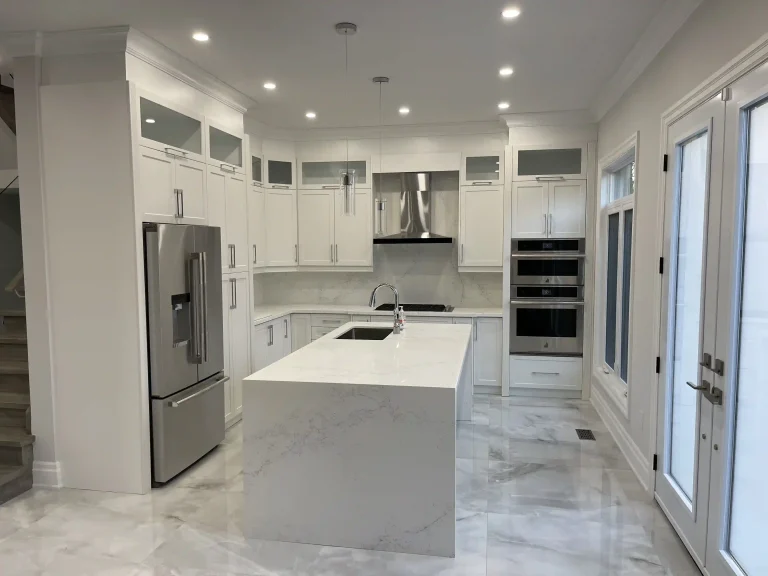
If the kitchen is the main reason you're thinking of moving, price a kitchen renovation in Oakville first. Taking out a wall and moving the kitchen to the back of the house often solves the "we've outgrown it" feeling for a fraction of what a move costs.
Our recommendation
If you like your neighbourhood and your lot has room, renovate or add on. In our example, about $100,000 goes to fees and taxes before the new house has done anything for you. The same money is a large part of an addition that you design yourself. Move when the lot, the location or the condition of the house means no renovation can get you there, or when the honest renovation total is bigger than the price gap plus moving costs.
To see how kitchens, baths, basements and additions fit together in one project, start with our whole-home renovations page. Then look at the scope and local details for home renovations in Oakville. When you have your own move numbers worked out, book a consultation with our team and we'll price the stay-and-build option so you can compare the two properly.