Yes, heated flooring is worth it in most Ontario homes if you put it in the right rooms. Electric floor heat in a bathroom, kitchen or basement costs pennies an hour to run at Ontario's November 2026 electricity rates, and it warms a tiled floor quickly. Heating a whole house through the floor is a bigger decision. That calls for hydronic (hot water) heat, which makes the most sense in new builds, additions and new basement slabs.
- A 50 sq ft electric bathroom floor running at full output costs about 6 to 12 cents an hour on Ontario Time-of-Use rates.
- Electric is cheap to install and warms up fast. Hydronic costs more to install, costs less to run over large areas, and responds slowly.
- Tile and stone are the best floors to heat. Approved vinyl, laminate and engineered wood also work. Solid hardwood is not recommended.
- Electric floor heat in Ontario needs an ESA notification, and the circuit should be wired by a licensed electrical contractor.
Myth 1: Heated floors are too expensive to run
This myth comes from people picturing a whole house heated with electricity. A bathroom floor is a much smaller load.
Here's the math. A Schluter DITRA-HEAT cable rated for 16 sq ft draws 203 watts, which works out to about 12.7 watts per square foot. A main bathroom usually has around 50 sq ft of open floor once the tub and vanity are out of the way. That's roughly 635 watts, or 0.635 kWh for every hour it runs at full power. From November 1, 2026, the Ontario Energy Board's winter Time-of-Use prices are 9.1¢/kWh off-peak, 14.6¢ mid-peak and 18.9¢ on-peak. The Ultra-Low Overnight plan charges 3.7¢ from 11 p.m. to 7 a.m.
| 50 sq ft heated floor (635 W) | Per hour at full output | 3 hrs/day for 30 days |
|---|---|---|
| ULO overnight (3.7¢) | about 2¢ | about $2.10 |
| TOU off-peak (9.1¢) | about 6¢ | about $5.20 |
| TOU mid-peak (14.6¢) | about 9¢ | about $8.35 |
| TOU on-peak (18.9¢) | about 12¢ | about $10.80 |
These numbers cover the electricity only. Delivery, regulatory charges, HST and the Ontario Electricity Rebate (which the OEB says drops to 15.7% on November 1, 2026) change the final bill. The table is also a worst case. Once the floor reaches its set temperature, the thermostat switches the cable on and off to hold it there.
Fact: heating the floor of one room costs about as much per month as a couple of coffees. Heating a whole house with electric resistance cable is different. Ontario insurer Square One notes that because of the cost of electricity, electric radiant heat is usually used in small rooms or as supplemental heat.
Myth 2: It takes forever to warm up
That depends entirely on the type of system.
- Electric cables and mats sit just under the tile, set in thinset. There's very little mass to heat. In our experience, a tiled bathroom over a wood subfloor feels warm within the hour, and a programmable thermostat can have it warm before you get up.
- Hydronic tubing in a concrete slab is slow to heat and slow to cool, and that's by design. Penn State's energy course explains that a floor with enough thermal mass can store heat and keep a house comfortable for eight to ten hours.
Concrete slows electric systems down too. Schluter's installation handbook warns that concrete absorbs heat and lengthens warm-up, especially when there's no insulation layer underneath. That's why we always put a thermal break under heated floors in basements.
Fact: electric heats quickly and a hydronic slab is slow but steady. Set a slab system to one temperature and leave it. Deep setbacks every night don't suit it.
Myth 3: Heated floors only belong in bathrooms
Bathrooms are the obvious place for heated floors because tile is cold and you're barefoot. They're far from the only room where it pays off.
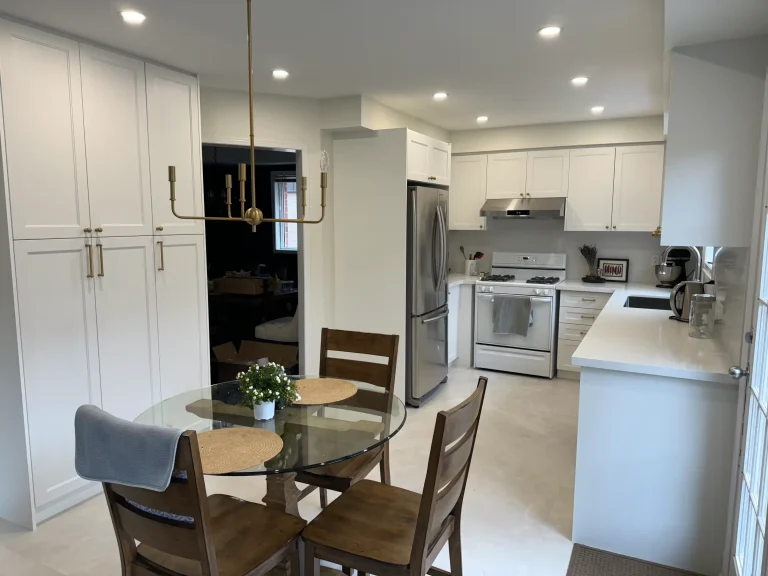
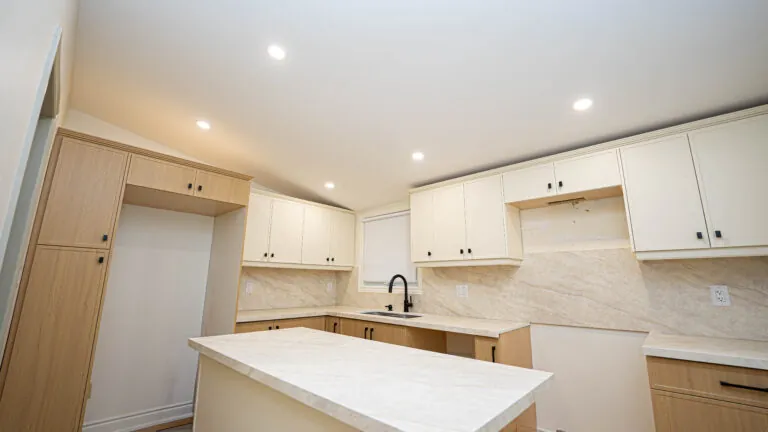
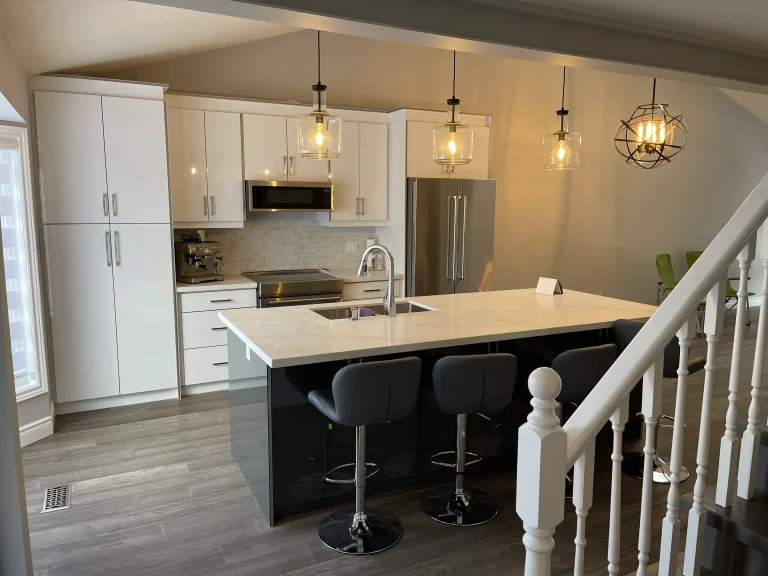
- Kitchens: you spend a lot of time standing on hard tile at the sink and range. Heat only the open floor and walkways, never under cabinets or the island. If you're planning a kitchen renovation, decide on floor heat before the cabinet layout is final.
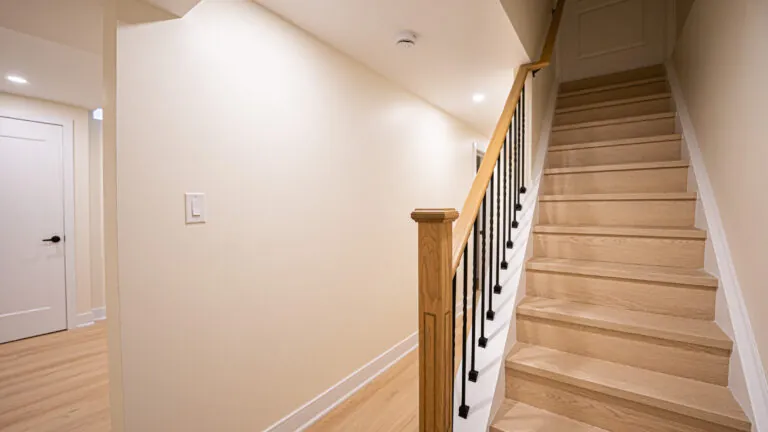
- Basements: a concrete slab stays cool even after the basement is finished. Floor heat over an insulated underlayment makes a finished basement feel like the rest of the house.
- Additions: new rooms over crawlspaces or slabs are often the coldest rooms in a house. When you're building a floor from scratch for a home addition, adding hydronic tubing or electric cable costs far less than it would later.
- Mudrooms and entries: a warm floor dries wet boots and mats faster.
Electric vs hydronic: the honest comparison
| Electric (cable or mat) | Hydronic (hot water tubing) | |
|---|---|---|
| Best for | Single rooms, renovations | Whole floors, new builds, slabs, additions |
| Heat source | Your electrical panel, on its own circuit | Boiler, water heater or heat pump |
| Install cost | Low | High |
| Running cost over large areas | High | Lower |
| Warm-up | Fast | Slow in concrete, faster in thin panels |
| Floor height added | About 1/4 in. with a membrane system | More, usually a concrete topping or panel layer |
| Approvals | ESA notification | Mechanical permit, plus a licensed gas technician if gas-fired |
Square One sums up the trade-off: hydronic is more expensive to install but cheaper to operate, which is why it's the system used to heat whole houses. Part of the install cost is the heat source. If you don't already have a boiler or a suitable heat pump, you're buying one.
What it costs to install in Ontario
Electric
Materials for a bathroom are modest. At Home Depot Canada, a WarmlyYours 3 ft x 10 ft Easy Mat (30 sq ft) has been listed at $458, and a basic non-programmable floor thermostat at $134. Retail prices change, so treat these as ballpark. On top of materials you pay for a licensed electrician, a dedicated circuit, the ESA notification, and self-levelling underlayment if the finished floor isn't tile.
In a bathroom that's already being gutted, floor heat is a small line item. Our main bathrooms run $28,000 to $40,000 and ensuites $35,000 to $55,000 before HST, and heated floors are a small slice of that. Adding them to a finished bathroom later costs far more, because the tile has to come up first.
Hydronic
Square One cites an industry estimate of $14,000 to $48,000 to put hydronic radiant heat throughout a 2,000 sq ft home, and notes it's often noticeably cheaper in a new build. That matches what we see. Hydronic makes sense when the floor is open anyway: a new slab, a new addition or a full gut.
Myth 4: You can only heat tile
Tile and stone conduct heat best, but other floors work within temperature limits.
| Floor covering | Works with floor heat? | What to watch |
|---|---|---|
| Porcelain, ceramic, stone | Best choice | Correct install and cable testing |
| Luxury vinyl (LVP/LVT), SPC, WPC | Yes, if the maker approves it | Surface temperature limit, often 27°C to 29°C |
| Laminate | Yes, if the maker approves it | Self-leveller over the cable, temperature limit |
| Engineered hardwood | Yes, if the maker approves it | Some makers cap the surface at 25°C |
| Solid hardwood | Not recommended | Drying, gapping and cupping |
| Carpet with thick underpad | Poor | The pad insulates the heat away from the room |
Schluter approves DITRA-HEAT under engineered wood, vinyl, WPC, LVT, LVP, SPC and laminate, with a cementitious self-levelling underlayment over the cables. Its handbook advises against solid hardwood because of its thickness and the risk of damage from drying out. For vinyl, WarmlyYours says most makers cap surface temperature at roughly 27°C to 29°C, and Warmup is stricter at 81°F (about 27°C). One engineered wood maker, Gaylord, sets a 25°C maximum surface temperature. Always read the warranty sheet for the exact product you're buying.
Myth 5: It's a weekend DIY job
Rolling out a mat looks easy. The wiring is where things go wrong. Ontario's Electrical Safety Authority warns that badly installed electric floor heat can cause fire, burns or electric shock, and its flash notice ties a fatality to cable that wasn't installed to the manufacturer's instructions. ESA says the circuit from the panel must be done by a licensed electrical contractor or by the homeowner, and it does not recommend the homeowner route.
What we see on site
- Test the cable three times. Take a resistance (ohm) reading out of the box, after it's set in the membrane, and after tile. A nicked cable is cheap to fix before tile and expensive after.
- Never cut it, never cross it. Order cable by heated area, not room size. Measure open floor only, not under the tub, vanity or cabinets.
- Keep clear of the toilet. Follow the manufacturer's minimum distance from the flange so the wax ring doesn't soften.
- Install the spare sensor. Some cables, like the DITRA-HEAT cable above, ship with two temperature sensors. We wire one and leave the other in the floor as a backup, because replacing a sensor later means lifting tile.
- Insulate over concrete. Without a thermal break, a basement slab soaks up the heat. Use an insulated membrane or underlayment.
- Photograph the layout before tiling, so nobody drives a vanity anchor through a cable later.
- Program it around peak hours. Winter on-peak runs 7 to 11 a.m. and 5 to 7 p.m. on weekdays. Warm the floor before 7 a.m. and the cost drops.
- Showers count too. Heated shower floors and benches are a popular add-on in our walk-in showers. They need the right waterproofing on top.
Where we'd put it, and where we wouldn't
We'd put electric floor heat in almost every bathroom we gut, plus mudrooms, tiled kitchens and basement bathrooms. We'd consider hydronic for a new addition, a full basement slab replacement or a custom build. We'd skip it under carpet, under solid hardwood, and as the main heat for an existing house running on electricity. Floor heat doesn't cool, filter or ventilate, so you still need those systems.
If you're planning a bathroom, put heated floors on the list at the first meeting, not as an afterthought. Our bathroom renovation page and cost estimator shows what a full project costs with floor heat included, so you can see where it fits in your budget. For local projects, see our Oakville bathroom renovation and Burlington bathroom renovation pages.