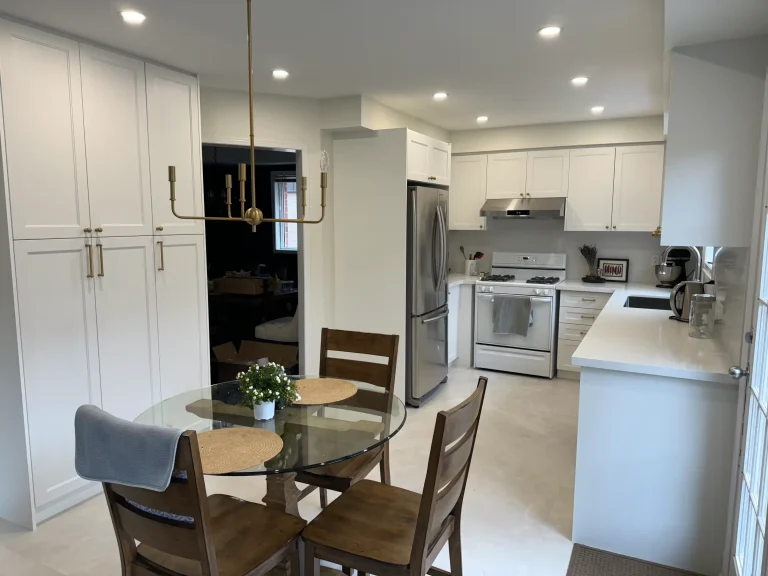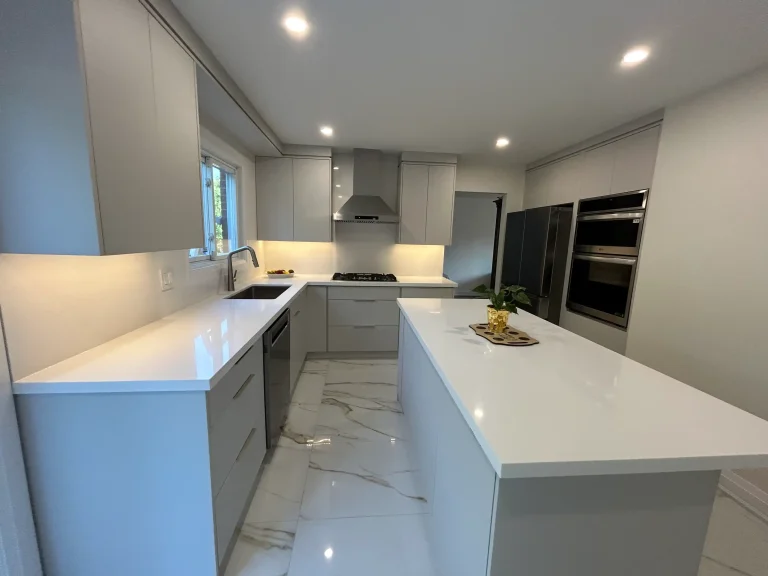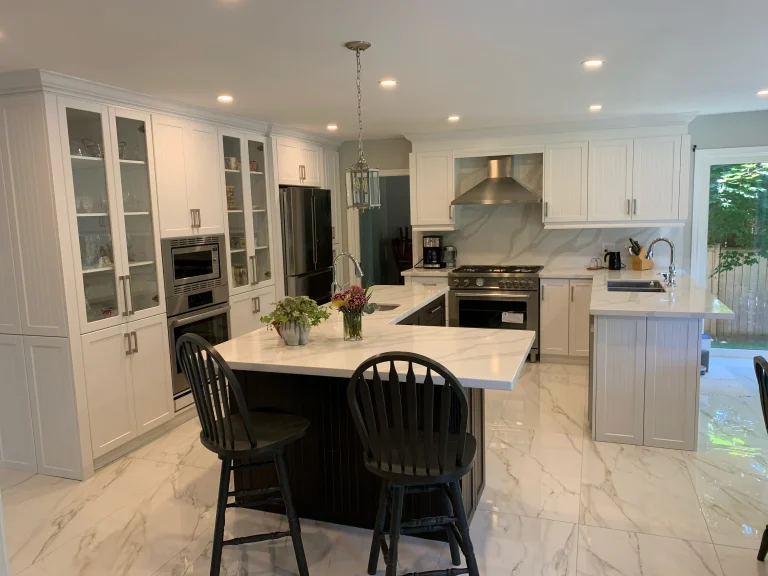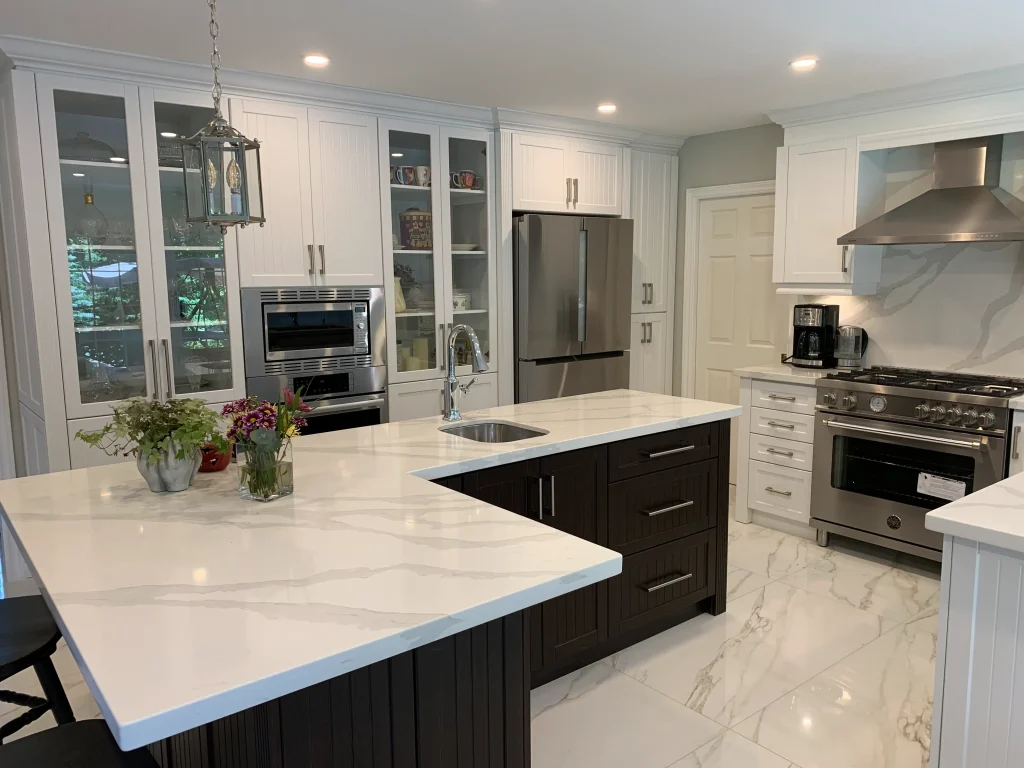
Yes. A winter kitchen renovation in Ontario works well, because a kitchen is interior work done inside a heated house. Cabinets take 8 to 14 weeks to build. If you sign off on a design in November, they get installed in January or February and your kitchen is finished before the spring rush.
- Cold weather doesn't stop interior work. Cabinets, counters, flooring and tile all go in with the heat on.
- Finish the design by late November and cabinets usually arrive between mid-January and late February.
- Demo waits until January, so you keep your kitchen through the holidays.
- Hood venting, gas lines and plumbing all carry on below freezing with the right products and a plan.
- Don't hold out for a winter discount. Renovation costs and borrowing rates are both rising.
Myth 1: Kitchen renovations should wait until spring
Fact: Spring is when most people start planning a kitchen, which makes it the worst time to start the work. Most of a kitchen timeline is spent waiting for cabinets to be built. Start that clock in November and the waiting happens over the winter. The install happens before the spring rush.
Here's a realistic schedule for a project that starts now. Your dates will move with design complexity, permits and the cabinet line you pick.
| Step | Typical duration | If you start in early November |
|---|---|---|
| Consultation, measure, layout | 1 to 2 weeks | Mid-November |
| Final design, selections, signed quote | 1 to 2 weeks | Late November |
| Permit (only if walls, structure or plumbing move) | Varies by municipality | Applied for in December while cabinets are in production |
| Cabinet production | 8 to 14 weeks | Ready mid-January to late February |
| Demo and rough-ins (electrical, plumbing, gas) | About 1 to 2 weeks | Timed to finish as cabinets arrive |
| Cabinet install | Usually under a week | January or February |
| Countertop template, fabrication, install | About 1 to 2 weeks after template | February to early March |
| Backsplash, trim, final electrical, punch list | About 1 week | Done by March |
The key point: demo waits for the cabinets. We don't tear out a working kitchen and then leave you without one for eight weeks. You keep cooking while the boxes and doors are built.
Myth 2: Materials can't be delivered or installed in the cold
Fact: Cabinets, quartz slabs, appliances and flooring come in enclosed trucks and go straight into a heated house. The cold itself isn't the risk. Temperature swings and dry air are.
- Let wood products acclimatize. Cabinet boxes, doors and wood flooring should sit indoors at normal room temperature before install. Follow the flooring maker's acclimation instructions exactly. Never store cabinets in an unheated garage.
- Watch the humidity. Furnace heat dries a house out. Utility guidance for cold-climate winters suggests that 30 to 35% relative humidity helps limit condensation on windows and walls. Wood moves as humidity changes, so a steady indoor climate matters more than the outdoor temperature.
- Expect seasonal movement in painted doors. Five-piece painted doors can show a hairline at the joints in dry months. That's the wood moving, not a defect. Our page on painted kitchen cabinets explains which door builds hold up best.
- Tile setting materials and paint list a minimum room temperature on the bag or can. In a normally heated house that's never a problem. We keep the heat on for the whole job.
Myth 3: With the windows shut, dust will fill the whole house
Fact: Dust control comes down to how the job is set up, not the season. A well-run site in January is cleaner than a sloppy one in June with the windows open.
- Seal the work zone with floor-to-ceiling plastic walls and a zippered door.
- Run a HEPA air scrubber in the kitchen, exhausting out a window or door so the room stays under slight negative pressure.
- Cover the return-air grilles inside the work zone so the furnace doesn't pull dust through every duct in the house.
- Change the furnace filter after demo and again after drywall sanding.
- Cut quartz in the fabricator's shop. Cutting on site should be limited to small adjustments, done wet or with dust extraction.
Myth 4: You can't vent a hood or do gas and plumbing work when it's freezing
Fact: All three are routine in winter. They just need the right products and a plan for short shut-offs.
Range hood ducting through an exterior wall
We core-drill from inside and fit the wall cap from outside. That's usually under an hour of outdoor work. The sealant is what people worry about, and building-grade silicones are made for this. Dow lists several of its silicone building sealants with a low-temperature application limit of -29°C, as long as surfaces are clean, dry and free of frost. Cold slows the cure, so we pick a dry day and leave the bead alone. We also insulate the duct where it passes through the cold wall so condensation doesn't drip back into the cabinet.
Gas lines
Moving a range's gas line means a short gas shut-off. In most homes that turns off the furnace too. We book it for the morning and the furnace is back on within hours. Under Ontario's fuel regulation, no one may install, alter or remove gas equipment without the proper TSSA certificate. That rule is the same in every season.
Electrical and plumbing
New circuits for an induction range, island outlets or under-cabinet lighting need a notification filed with the Electrical Safety Authority. ESA says you must file a notification before starting, even for small jobs. For plumbing, our rule winter and summer is to keep water supply lines out of exterior walls. If the sink sits under a window, we bring the lines up through the floor inside the sink cabinet.
Myth 5: Winter means big discounts, or every good contractor is booked
Fact: Neither is quite true. Interior trades work all year, and winter install slots are usually easier to get than spring ones. But costs aren't falling. The Canadian Home Builders' Association notes that Statistics Canada's Residential Renovation Price Index shows about a 3% rise year over year, and renovators say that figure understates the real cost increases.
Borrowing costs are heading the same way. On October 28, 2026, the Bank of Canada raised its policy rate by 25 basis points to 2.5%, and its next decision is December 9. Lenders use that rate as a benchmark, and changes to it can affect mortgage payments. If you're paying with a line of credit, waiting until spring won't guarantee a cheaper project.
| Factor | Start in November | Start in April |
|---|---|---|
| Install slot | January to February, easier to book | Summer, competing with the spring rush |
| Kitchen over the holidays | Intact | Intact |
| Kitchen for summer hosting | Finished | Possibly mid-construction |
| Material and labour prices | Current pricing | Possibly higher |
For budgeting, our kitchens run $40,000 to $140,000+ before HST, depending on size, layout changes and cabinet construction. Our kitchen renovation cost guide for Oakville shows where the money goes.
Myth 6: A winter renovation ruins the holidays
Fact: With a November start, the holidays land during cabinet production, when nothing is happening at your house. You host in your current kitchen and demo starts in January. Plan for one thing: many suppliers and factories close between Christmas and New Year's. We build that week into the schedule from day one so nobody gets caught out.
Set up a temporary kitchen before demo day: fridge, microwave, kettle, an induction hot plate and a folding table in the dining room or basement. With a laundry sink nearby, four to six weeks without a kitchen is much easier.
What we see on site in winter
- Salt and slush. Boots carry salt across your floors. We lay floor protection from the entry to the kitchen and set up a boot station at the door the crew uses.
- Appliances drive the cabinet drawings. Cabinets are built to exact appliance specs. Choose your range, hood, fridge and dishwasher before the cabinet order goes in, not after. A late appliance change is the most common reason a winter schedule slips.
- Cold exterior walls tell the truth. Open an exterior kitchen wall in January and you can feel exactly where insulation is missing. We fix it while the wall is open. At that stage it costs very little.
- Bin placement. A bin on a snowy driveway needs a cleared, level spot and a plan for the plow. Sort it out before demo day.
- Box material matters more in dry air. It affects how well screws hold and how cabinets handle moisture at the sink. Our comparison of plywood vs melamine cabinet boxes covers the trade-offs.
Who should start now, and who should wait
| Start now if... | Consider waiting if... |
|---|---|
| The work stays inside the existing house | The kitchen is part of a bump-out or addition that needs new foundations |
| You want it done before spring listing season or summer hosting | You haven't settled on a layout or budget and would be rushing decisions |
| You can make your selections in the next three weeks | Someone at home has health needs that make four to six weeks without a kitchen hard |
| Your layout stays mostly the same, or only interior walls move | You're replacing large exterior openings, like a new patio door, and would rather do that in mild weather |
Our advice is simple. If it's an interior kitchen and you're close to decided, start now. If the kitchen is tied to an addition, do the design work this winter and break ground once the frost is out. Our home additions team can plan both together.
To see what your layout would cost, try the estimator on our kitchen renovations page. For local timelines and recent projects, see our pages on kitchen renovations in Oakville and kitchen renovations in Burlington.